Shenandoah Valley · Virginia
Flooring Companies in Staunton, VA
License-checked pros, shown in a neutral order. You do the hiring.
Find flooring companies serving Staunton and nearby Harrisonburg and Winchester. The License Verified mark means we confirmed an active Virginia contractor license on the date shown, nothing more and nothing less.
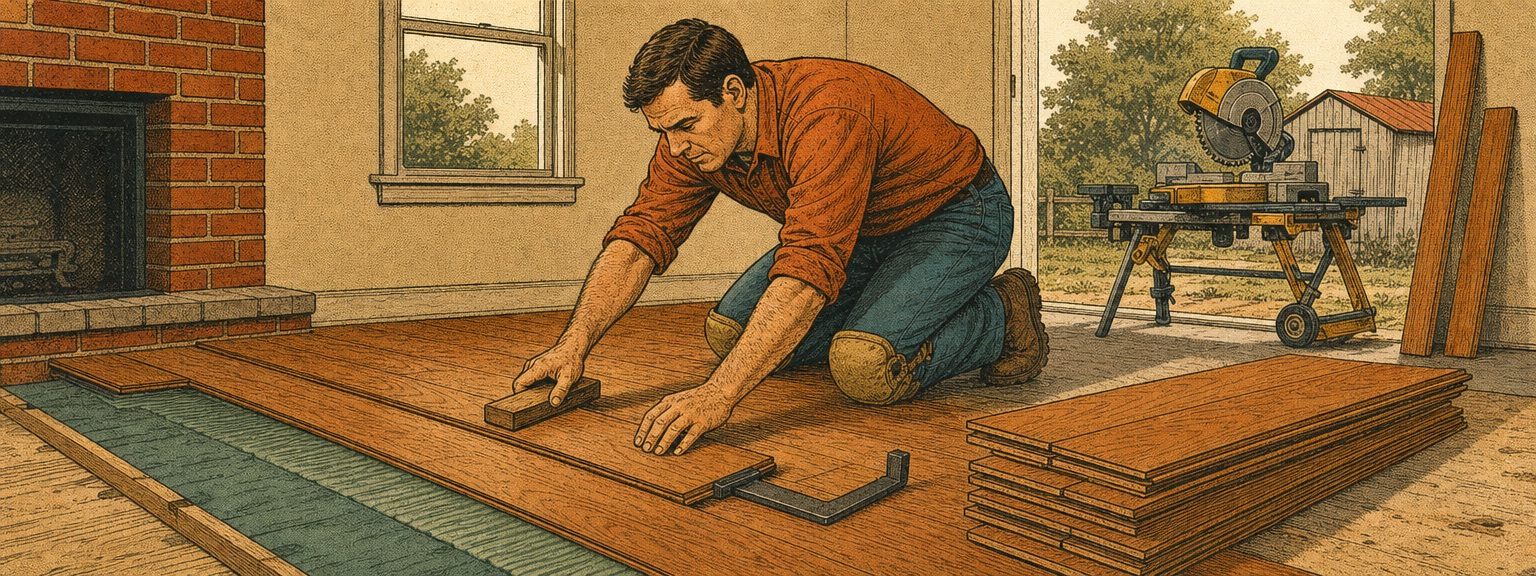
Floors take every step in the house, and the right ones make a Virginia home feel finished. A flooring company handles hardwood, tile, LVP, and carpet, and the prep that makes them lie flat and last.
The work
What it covers
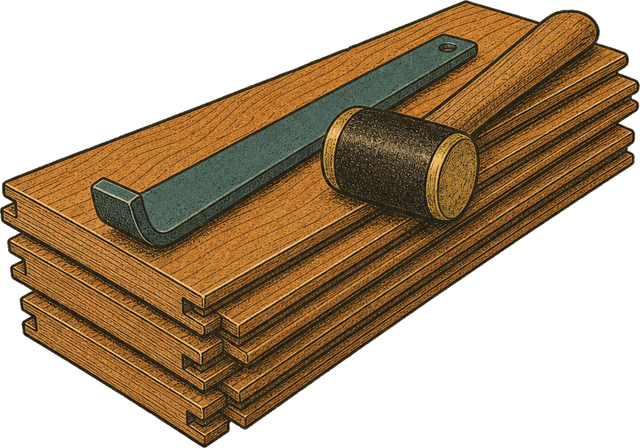
- Hardwood installation and refinishing
- Luxury vinyl plank and laminate
- Tile floors and backsplashes
- Carpet installation
- Subfloor prep and repair
- Stair treads and transitions
The register
Flooring Companies in Staunton
Ballpark
What it costs in Virginia
| Hardwood installed (material and labor) | $8 to $16/sq ft |
| Hardwood sand and refinish | $3 to $8/sq ft |
| Luxury vinyl plank or laminate installed | $4 to $12/sq ft |
| Tile floor installed | $10 to $30/sq ft |
| Carpet installed | $3 to $8/sq ft |
| Stair treads, per step installed | $100 to $300 per step |
Staunton prices track these statewide ranges. These are rough ranges, not quotes. What you actually pay swings with the material you pick, how many square feet you cover, whether the old floor and any soft or rotted subfloor have to come out first, and how many closets, stairs, and odd cuts the job hides. Virginia humidity matters too, since solid wood has to sit inside and settle to the room before it goes down, and a concrete slab that never fully dried will fight a glue-down floor. Get two or three written quotes before you sign anything.
Signs you might need to hire a pro
- Boards that cup, crown, or lift at the seams, usually after a humid stretch or a slow leak
- Soft, springy spots underfoot that flex when you step on them, which points at the subfloor
- Finish worn down to bare gray wood in the traffic lanes and in front of the sink
- Tile that sounds hollow when you tap it, or grout lines cracking and popping loose
- Carpet you cannot get clean anymore, or a seam that keeps peeling up in a doorway
Before you sign
Licensing in Virginia
Any contracting job of 1,000 dollars or more has to go to a business licensed with the Virginia DPOR Board for Contractors, and under that none is required. The class on that license is a dollar ceiling, not a grade of quality. Class C covers single jobs under about 10,000 dollars, Class B under about 120,000, and Class A has no ceiling, so a small Class C outfit is not worse than a Class A, it just takes smaller work.
A legitimate flooring pro in Virginia usually works under a Class A, B, or C contractor license, most often carrying a Residential Building Contractor (RBC) or Commercial Building Contractor (CBC) classification, or a flooring and floor covering specialty designation. Any flooring job of $1,000 or more, materials and labor, has to be handled by a licensed contractor.
Verify it yourself. Look up any license at the Virginia DPOR lookup and ask for proof of insurance before you hire.
Facts on the table. You do the hiring. -M.H.
Good to know
Common questions about flooring companies in Staunton
Is luxury vinyl plank really as good as hardwood?
Depends what you want out of it. LVP is waterproof and holds up in a basement, a kitchen, or a coastal house that stays damp, and it costs less to put down. Real hardwood you can sand and refinish more than once over the years, and it tends to help resale. In a wet room I lean vinyl, in a dry living area I lean wood.
Can I refinish my floors instead of replacing them?
If the boards are solid wood and still thick enough, usually yes. Sanding and recoating runs a good bit less than tearing everything out and starting over. Thin engineered floors, or ones already sanded down near the tongue, can only be replaced, so have someone look before you count on it.
Does a flooring installer need to be licensed in Virginia?
For any job that runs $1,000 or more, materials and labor together, Virginia requires a licensed contractor. Ask for the license number and check it on the DPOR website before work starts. Under that amount the law does not require a license, but I still want to see proof of insurance.
Why does the installer want to test my slab or leave the flooring sitting in the house first?
Moisture, plain and simple. Wood and even vinyl move with the humidity we get here, and a concrete slab can hold water you cannot see. Letting the material acclimate and testing the slab keeps the floor from buckling or gapping a season later. That is not the installer stalling on you.